
Preview "Sustaining the Carrier War" in a new window.
This title will be released on .
This eBook is no longer available for sale.
This eBook is not available in your country.
Book Description
Winner of the 2023 John R. Lyman Award in Maritime History, North American Naval History
A 2024 Samuel Eliot Morison Award for Naval Literature Honorable Mention
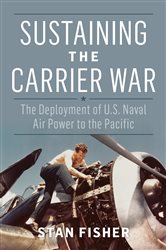
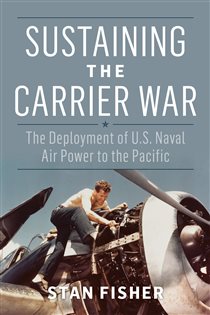
The ability of the United States Navy to fight and win a protracted war in the Pacific was not solely the result of technology, tactics, or leadership. Naval aviation maintenance played a major role in the U.S. victory over Japan in the second World War. The naval war against Japan did not achieve sustained success until enough aircraft technicians were available to support the high tempo of aviation operations that fast carrier task force doctrine demanded. When the United States realized war was imminent and ordered a drastic increase in the size of its aviation fleet, the Navy was forced to reconsider its earlier practices and develop new policies in maintenance, supply, and technical training. Not only did a shortage of technicians plague the Navy, but the scarcity of aviation supply and repair facilities in the Pacific soon caused panic in Washington. While the surface Navy's modernization of at-sea replenishment was beneficial, it did not solve the problems of sustaining war-time aircraft readiness levels sufficient to a winning a naval air war. Fisher outlines the drastic institutional changes that accompanied an increase in aviation maintenance personnel from fewer than 10,000 to nearly 250,000 bluejackets, the complete restructuring of the naval aviation technical educational system, and the development of a highly skilled labor force. The first comprehensive study on the importance of aircraft maintenance and the aircraft technician in the age of the aircraft carrier, Sustaining the Carrier War, provides the missing link to our understanding of Great Power conflict at sea.
A 2024 Samuel Eliot Morison Award for Naval Literature Honorable Mention
The ability of the United States Navy to fight and win a protracted war in the Pacific was not solely the result of technology, tactics, or leadership. Naval aviation maintenance played a major role in the U.S. victory over Japan in the second World War. The naval war against Japan did not achieve sustained success until enough aircraft technicians were available to support the high tempo of aviation operations that fast carrier task force doctrine demanded. When the United States realized war was imminent and ordered a drastic increase in the size of its aviation fleet, the Navy was forced to reconsider its earlier practices and develop new policies in maintenance, supply, and technical training. Not only did a shortage of technicians plague the Navy, but the scarcity of aviation supply and repair facilities in the Pacific soon caused panic in Washington. While the surface Navy's modernization of at-sea replenishment was beneficial, it did not solve the problems of sustaining war-time aircraft readiness levels sufficient to a winning a naval air war. Fisher outlines the drastic institutional changes that accompanied an increase in aviation maintenance personnel from fewer than 10,000 to nearly 250,000 bluejackets, the complete restructuring of the naval aviation technical educational system, and the development of a highly skilled labor force. The first comprehensive study on the importance of aircraft maintenance and the aircraft technician in the age of the aircraft carrier, Sustaining the Carrier War, provides the missing link to our understanding of Great Power conflict at sea.
In The Press
About the Author
Read on Your Favourite Devices
to find out more
