
Preview "Introduction to Seismology (3rd ed.)" in a new window.

This title will be released on .
This eBook is no longer available for sale.
This eBook is not available in your country.
Book Description
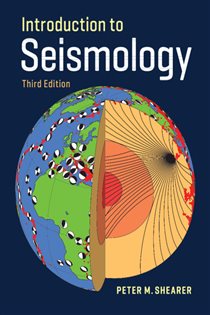
This third edition provides a concise yet approachable introduction to seismic theory, designed as a first course for graduate students or advanced undergraduate students. It clearly explains the fundamental concepts, emphasizing intuitive understanding over lengthy derivations, and outlines the different types of seismic waves and how they can be used to resolve Earth structure and understand earthquakes. New material and updates have been added throughout, including ambient noise methods, shear-wave splitting, back-projection, migration and velocity analysis in reflection seismology, earthquake rupture directivity, and fault weakening mechanisms. A wealth of both reworked and new examples, review questions and computer-based exercises in MATLAB®/Python give students the opportunity to apply the techniques they have learned to compute results of interest and to illustrate Earth's seismic properties. More advanced sections, which are not needed to understand the other material, are flagged so that instructors or students pressed for time can skip them.
In The Press
About the Author
Read on Your Favourite Devices
to find out more
