
Preview "The Varieties of Religious Experience" in a new window.
This title will be released on .
This eBook is no longer available for sale.
This eBook is not available in your country.
Book Description
Selected by the Modern Library as one of the 100 best nonfiction books of all time
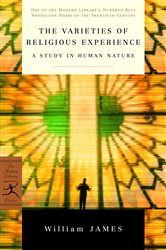
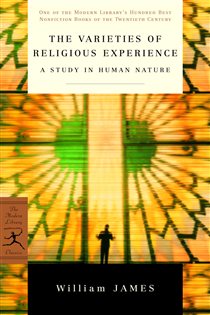
The Varieties of Religious Experience is certainly the most notable of all books in the field of the psychology of religion and probably destined to be the most influential [one] written on religion in the twentieth century' said Walter Houston Clark in Psychology Today. The book was an immediate bestseller upon its publication in June 1902. Reflecting the pluralistic views of psychologist-turned-philosopher William James, it posits that individual religious experiences, rather than the tenets of organized religions, form the backbone of religious life. James's discussion of conversion, repentance, mysticism, and hopes of reward and fears of punishment in the hereafter--as well as his observations on the religious experiences of such diverse thinkers as Voltaire, Whitman, Emerson, Luther, Tolstoy, and others--all support his thesis. 'James' characteristic humor, his ability to put down the pretentious and to be unpretentious, and his willingness to take some risks in his choices of anecdotal data or provocative theories are all apparent in the book,' noted Professor Martin E. Marry. 'A reader will come away with more reasons to raise new questions than to feel that old ones have been resolved.'
The Varieties of Religious Experience is certainly the most notable of all books in the field of the psychology of religion and probably destined to be the most influential [one] written on religion in the twentieth century' said Walter Houston Clark in Psychology Today. The book was an immediate bestseller upon its publication in June 1902. Reflecting the pluralistic views of psychologist-turned-philosopher William James, it posits that individual religious experiences, rather than the tenets of organized religions, form the backbone of religious life. James's discussion of conversion, repentance, mysticism, and hopes of reward and fears of punishment in the hereafter--as well as his observations on the religious experiences of such diverse thinkers as Voltaire, Whitman, Emerson, Luther, Tolstoy, and others--all support his thesis. 'James' characteristic humor, his ability to put down the pretentious and to be unpretentious, and his willingness to take some risks in his choices of anecdotal data or provocative theories are all apparent in the book,' noted Professor Martin E. Marry. 'A reader will come away with more reasons to raise new questions than to feel that old ones have been resolved.'
In The Press
About the Author
Read on Your Favourite Devices
to find out more
