
Preview "Government in the Future" in a new window.

This title will be released on .
This eBook is no longer available for sale.
This eBook is not available in your country.
Book Description
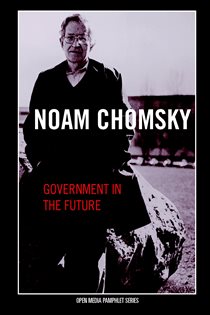
In this classic talk delivered at the Poetry Center, New York, on February 16, 1970, Noam Chomsky articulates a clear, uncompromising vision of social change. Chomsky contrasts the classical liberal, libertarian socialist, state socialist, and state capitalist world views and then defends a libertarian socialist vision as "the proper and natural extension . . . of classical liberalism into the era of advanced industrial society."
In his stirring conclusion Chomsky argues, "We have today the technical and material resources to meet man’s animal needs.We have not developed the cultural and moral resources or the democratic forms of social organization that make possible the humane and rational use of our material wealth and power.
Conceivably, the classical liberal ideals as expressed and developed in their libertarian socialist form are achievable. But if so, only by a popular revolutionary movement, rooted in wide strata of the population and committed to the elimination of repressive and authoritarian institutions, state and private. To create such a movement is a challenge we face and must meet if there is to be an escape from contemporary barbarism."
In his stirring conclusion Chomsky argues, "We have today the technical and material resources to meet man’s animal needs.We have not developed the cultural and moral resources or the democratic forms of social organization that make possible the humane and rational use of our material wealth and power.
Conceivably, the classical liberal ideals as expressed and developed in their libertarian socialist form are achievable. But if so, only by a popular revolutionary movement, rooted in wide strata of the population and committed to the elimination of repressive and authoritarian institutions, state and private. To create such a movement is a challenge we face and must meet if there is to be an escape from contemporary barbarism."
In The Press
About the Author
Read on Your Favourite Devices
to find out more
